The Eye
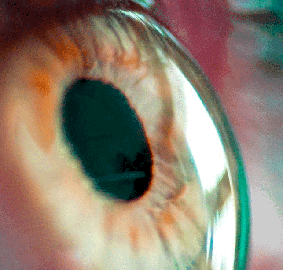
The cornea presents significant challenges for therapeutic development due to its specialised structure, protective barriers, and sensitivity to injury and inflammation. Delivering therapies effectively to corneal tissue remains difficult because of limited drug penetration, tear clearance, and the need to preserve corneal transparency and function.
MicroTex explores microscale approaches that may support more precise, predictive, and translationally relevant corneal research and therapeutic development.
Key Challenges in Ocular Therapeutics
The eye presents major challenges for therapeutic delivery and translational research.

Protective Ocular Barriers
Corneal and tear film barriers can limit therapeutic penetration and absorption.

Inflammation and Disease
Inflammation and ocular disease may alter tissue function and therapeutic effectiveness.

Limited Drug Retention
Blinking, tear turnover, and drainage can rapidly reduce local therapeutic retention.
What is Microbial Keratitis?
Microbial keratitis is an infection of the cornea, the transparent front surface of the eye. It is caused by bacteria, fungi, parasites, or other microorganisms and is considered an ophthalmic emergency. Without rapid diagnosis and treatment, microbial keratitis can lead to corneal scarring, permanent vision impairment, or blindness.
A Global Health Challenge
Microbial keratitis is one of the leading causes of corneal blindness worldwide. Current estimates suggest that more than 2 million people develop the condition each year, with the greatest burden occurring in South, South-East, and East Asia. Countries such as India experience particularly high rates due to a combination of environmental, occupational, and healthcare factors
Why Are Better Treatments Needed?
Although most patients are treated with antimicrobial eye drops, the cornea forms a strong protective barrier, meaning only a small proportion of the drug reaches the infected tissue. Delays in diagnosis, limited drug penetration, and emerging antimicrobial resistance can all reduce treatment effectiveness, highlighting the need for new approaches to ocular therapeutic delivery.
Microscale Approaches in the Eye
Areas of Focus
Controlled ocular delivery
Rep quia consequuntur magni dolores eos qui ratione voluptatem sequi nesciunt. Neque porro quisquam est, qui dolorem ipsum quia dolor sit amet, consectetur, adipisci velit, sed quia non numquam eius modi temporaRep quia consequuntur magni dolores eos qui ratione voluptatem sequi nesciunt. Neque porro quisquam est, qui dolorem ipsum quia dolor sit amet, consectetur, adipisci velit, sed quia non numquam
Localised therapeutic targeting
Rep quia consequuntur magni dolores eos qui ratione voluptatem sequi nesciunt. Neque porro quisquam est, qui dolorem ipsum quia dolor sit amet, consectetur, adipisci velit, sed quia non numquam eius modi temporaRep quia consequuntur magni dolores eos qui ratione voluptatem sequi nesciunt. Neque porro quisquam est, qui dolorem ipsum quia dolor sit amet, consectetur, adipisci velit, sed quia non numquam
Translational ophthalmic research
Micropatch Technologies
Eye infections are commonly treated with eye drops, but the cornea acts as a strong barrier, meaning only a small amount of the medicine reaches the target area. This can limit how effective the treatment is.
MicroTex is developing micropatch technologies designed to deliver small, controlled doses of medicine directly to the cornea, improving local delivery compared to traditional eye drops.
These patches may also allow monitoring of how the eye responds to treatment over time.